

Istanbul, the magnificent city of marvels, is filled with historical, religious, cultural, political and social iconic structures and venues.
Hürrem Sultan Hammam
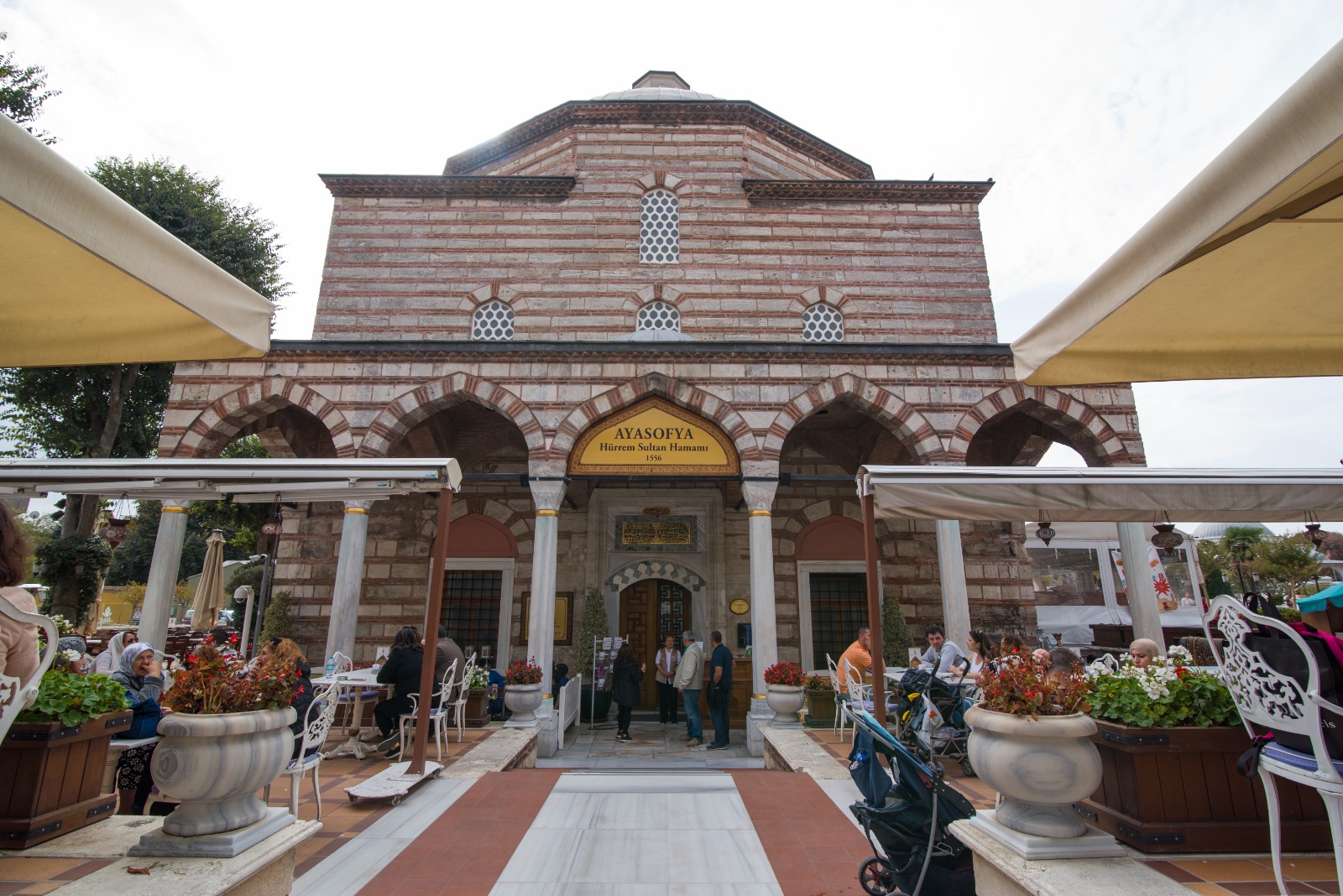
Hürrem Sultan Hammam is located in the treasured historical peninsula, between the Blue Mosque and the Hagia Sophia. The facility has three di#erent sections; Turkish bath, Mihri Restaurant and café. Hürrem Sultan Hammam is the biggest historical hammam in Türkiye and was designed and built by Mimar Sinan, the chief Ottoman architect. It was built at the request of Hürrem Sultan (Roxelana), the wife of Sultan Suleiman the Magnificent in the 16th century (1556-1557 AD). It was built where the ancient public baths of Zeuxippus (100- 200 AD) used to stand. The hammam was restored according to its original features with a huge investment. The facility reopened in 2011 with the brand name of “Hürrem Sultan Hammam”.
The hammam which is located in the middle of Sultanahmet Square is a holy shrine just like its neighbors. It is a shrine of healing and purification with water which is a part of an extensive culture… This spiritual and physical purification shrine where Ottoman soul is presented with modern needs has been receiving a lot attention since the day it is restored. Hürrem Sultan Hammam is a pioneer within the other Turkish baths with its luxurious and glorious service understanding. The hammam allows its guests from all around the world to experience a Sultan like day.
An enchanting architecture!
The structure belongs to the classical period Ottoman bath architecture with its double bath shape and 75 meters length. It opened a new era in Turkish Bath architecture and has the title of being the first structure where women and men sections are on the same axis. At the Hürrem Sultan Hammam, trained expert bath attendants, rubbers, masseurs and masseuses provide their exclusive services. Prepare to be born again and stay healthy on the marble bath basins while enjoying the historic domes of the hammam.
The Panorama 1453 Museum Of History
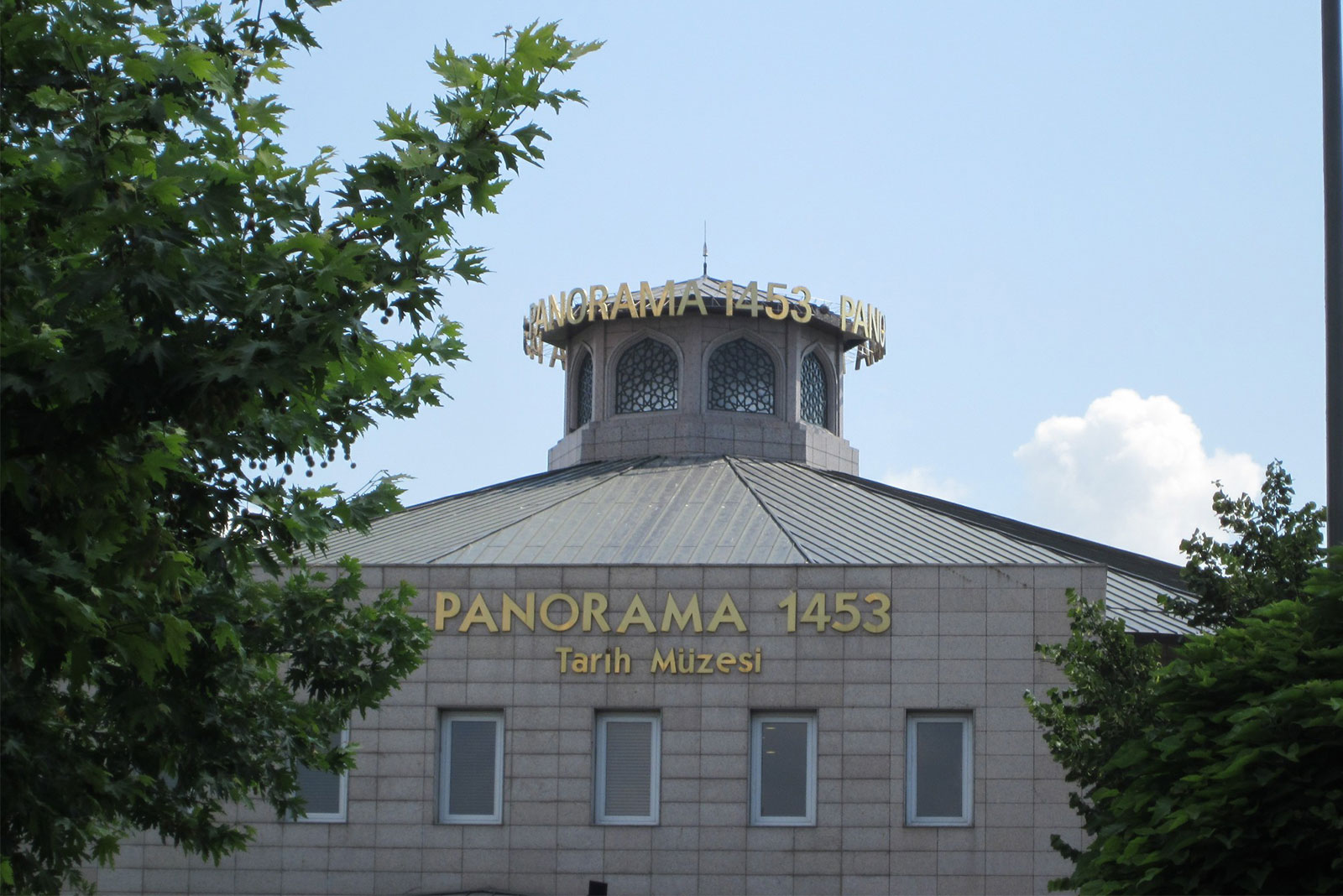
The Panorama 1453 Museum of History is a marvelous venue which portrays the historical process of the conquest of Istanbul and allows its visitors to relive that day. The museum was established by Istanbul Metropolitan Municipality in 2009 and holds the title of ‘the world’s first full-panoramic museum’. The Panorama 1453 Museum of History has two main sections. The first section starts with the entrance and goes through the panoramic picture. What di#ers the museum from other panoramic museums is this picture which was applied onto a hemisphere of 38 m diameter. The interior of the hemisphere is covered by the picture. It is 2350 cubic meters and allows visitors to observe it from all aspects and directions. The picture creates a depth perception and as soon as the visitors see it, they are not able to perceive the real dimension with their eyes. This is an unforgettable museum which creates a unique experience for everyone. Don’t forget to add The Panorama 1453 Museum of History on your list!
Flower Passage “Çiçek Pasajı” With No Florists
Çiçek Pasajı “Flower Passage” is one of the most famous and popular food & beverage venues of Istanbul which hosts many seafood restaurants. The history of the passage is another story. An Ottoman-Greek banker, Christakis Zografos, built a new type of building called “Citè de Pera” in 1876. The building/ bazaar had 24 shops designed in Parisian style, which was trendy at those times, and 18 luxurious apartments over the shops. In 1908, the ownership of the building was transferred to the Grand Vizier Mehmed Said Pasha, after a while florists began to settle within the passage and its name was turned into the “Flower Passage”. After 1940, restaurants took place in the passage; and this gradually moved apartment owners and florists to other places but the name “flower” (çiçek) remained. The restaurants within Çiçek Pasajı reflects the traditional Turkish cuisine & seafood cuisine and the passage is definitely one of the must-visit places in Istanbul.
Esma Sultan Mansion
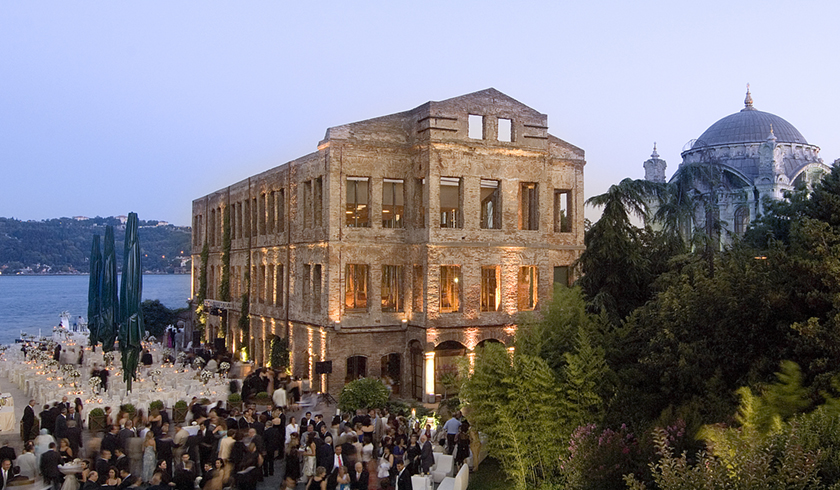
The mansion took its name after Esma Sultan, the daughter of the 32nd Ottoman ruler, Sultan Abdülaziz. The fabulous and historical mansion witnessed many events and figures over time. When Esma Sultan died in 1899, Abdul Hamid II gave the mansion to his daughter Cemile Sultan. In 1915, the mansion was claimed from the Ottoman Empire, and in succession, was used as a Greek school in 1918 and it became a tobacco depot in 1922. In 1975, the mansion su#ered a very big fire and the only thing remained was its exterior walls. In the early 90s, a hotel group purchased Esma Sultan Mansion and rebuilt the building. Its original character and floor plan was preserved, as it adopted a new cultural identity. In 2001, in line with Philip Robert’s project, the building underwent renovations from within, gaining a sturdy, yet classy iron and glass interior. This renovation allowed the mansion to remain open all year-round.
A Fairytale Land: The Çemberlitaş Hamam
Çemberlitaş Hamam is a historical Turkish bath which was constructed by Sinan the Architect (Mimar Sinan). The hamam has been working since 1584, the day it was opened. When Esma Sultan died in 1899, Abdul Hamid II gave the mansion to his daughter Cemile Sultan. In 1915, the mansion was claimed from the Ottoman Empire, and in succession, was used as a Greek school in 1918 and it became a tobacco depot in 1922. In 1975, the mansion su#ered a very big fire and the only thing remained was its exterior walls. In the early 90s, a hotel group purchased Esma Sultan Mansion and rebuilt the building. Its original character and floor plan was preserved, as it adopted a new cultural identity. In 2001, in line with Philip Robert’s project, the building underwent renovations from within, gaining a sturdy, yet classy iron and glass interior. This renovation allowed the mansion to remain open all year-round. located on Çemberlitas Square on Divanyolu Street. The Çemberlitas Hamam was planned as a double bath consisting of two identical, side-by-side facilities. The bath has 38 washing stalls. The plan of the hot area is unique, as it does not entirely conform to traditional layouts. This space is shaped like a square on the outside, but the inner dimensions are in the shape of a circle formed of twelve columns, becoming a twelve-cornered polygon. The hamam is one of Sinan’s latest works and his long experience and great skill allowed him to combine functionality, elegance and tranquility without abandoning his basic style that is devoid of overly decorated elements. The architecture of Çemberlitaş Hamam remains a focal point for Turkish and foreign researchers, photographers, filmmakers, media professionals and students.
Hacopulo Passage
This little passage is one of the hidden gems of Beyo ğlu, İ s – tiklal Street, with little cafés and shops selling souvenirs, it’s may – be the cutest place to sip a cup of Turkish tea anywhere in the city. In 1871, merchant Hacopulo’s pas – sage-way had houses on the up – per floors and shops on the lower floor, and this original design re – mains intact up to the present day. The narrow façade of the arcade on the İstiklal side displays neo – classical features, while the struc – tures facing the inner courtyard are more neo-Renaissance in style.
Beykoz Kundura Factory
As an industrial cultural heri – tage, Beykoz Kundura is serv – ing the creative industry as an event venue and a set for filming. The building was founded as a tanning yard.
It participated in the International Paris Fair, which was di $cult to enter at the time, and Expo Uni – verselle. After that, it won a medal for its manufacturing plant in the International Vienna Fair. In the 90s, the building was operating as Sümerbank Leather Shoe Fac – tory. Since 2010, Beykoz Kundura is being used as a natural stage for filming with its unusual architec – ture and themed-areas.